
What Skills For CV Do Employers Look For In 2026?
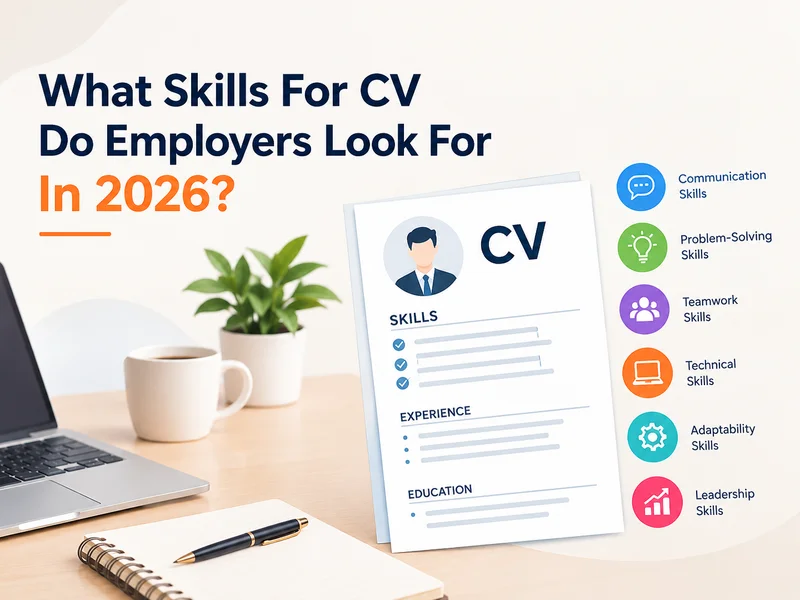
You can even make a CV look polished, but still miss the mark if it does not show what you can actually do. Employers are increasingly screening for a blend of technical ability, adaptability, problem-solving and strong human skills in 2026. The World Economic Forum reports that 39% of workers’ existing skill sets are expected to change or become outdated between 2025 and 2030.
This shift is changing the way candidates are presenting themselves. If you are simply listing familiar workplace abilities, it is no longer enough. Your CV should be able to demonstrate relevant, current and transferable strengths. This blog will walk you through the importance of listing skills, crucial skills for 2026 and steps to add them to your CV.
Importance Of Listing Skills On Your CV
It is not just about padding to list your skills for CV, but it is about strategic visibility. Below is why it is crucial to list your abilities.
- Beating The Bots: If you use the relevant skills on your resume, it can help you beat ATS software and score higher in automated searches.
- Specific Targeting: You can bridge the gap between your experience and the job description if you tailor your CV according to the job description.
- Clear Visuals: It is ideal to use good skills for your CV to showcase your range and versatility at first glance.
- Instant Impact: It is best to highlight the right skills to catch an employer’s eye during the initial scan of six seconds.
- Proving Value: If you use measurable data, it can help you convey your professional impact instead of listing vague responsibilities.
The data you are listing on your CV should prove that you are the solution to the problem of the employer.
What Skills Are Employers Looking For In 2026?
When you craft the strongest CV, it can reflect the changing workplace instead of relying on generic phrases. Employers are increasingly looking for evidence on resumes that a candidate can think independently, use technology and respond effectively when circumstances change.
● Analytical Thinking
Analytical thinking is still a valuable skill for the resume. It has been found that 69% of surveyed employers are considering it a core workforce skill in 2025.
You should show what happened instead of writing “good problem solver,”. For example: “Analysed monthly sales data and identified a pricing issue that has helped to reduce reporting errors by 18%.” If you provide a specific result, it can give the employer something tangible to assess.
● Communication And Collaboration
The skill of strong communication is still crucial for your CV because technology does not remove the need to work with people. Employers are continuously valuing leadership, empathy, social influence and active listening along with technical capabilities.
When it comes to describing skills on the CV, you should connect communication to an outcome. You must mention presentations delivered, teams coordinated, clients supported or complex information explained to non-specialists.
● AI And Digital Literacy
Technology has become a part of ordinary work, not just specialist technology roles. Employers are expecting AI and big data to be among the fastest-growing skill areas through 2030 and LinkedIn has reported that AI literacy was among the fastest-growing skills in 2025.
This does not mean that every candidate needs to be a programmer. It depends on your profession. Useful examples include using generative AI responsibly, automating repetitive tasks, analysing data, or working confidently with industry software.
● Adaptability And Resilience
Employers can change workplaces quickly. New softwares are arriving, responsibilities are shifting and teams often have to respond to unexpected demands.
The WEF has identified resilience, flexibility, and agility as the second most commonly identified core skill among employers, with 67% considering it essential in 2025. This is why good skills and abilities for CV writing should demonstrate how you handled change instead of simply claiming you are adaptable.
● Creative Thinking
The skill of creativity is no longer just limited to advertising, design or media jobs. Businesses are now looking for those employees who can question inefficient processes, develop alternatives and approach difficult problems from different angles.
You may demonstrate creative thinking just by describing a process that you have redesigned, a new campaign you introduced or an unusual solution that improved customer experience. The WEF also lists creative thinking among those skills that are expected to rise in importance.
● Continuous Learning
A qualification that you have earned several years ago cannot tell an employer everything about what you can do today. The skills of curiosity and lifelong learning are increasingly important as technology and job requirements are evolving.
This is where your curriculum vitae key skills should be connected with recent development. You should include relevant certifications, professional training, workshops, new software learned or projects completed independently.
How Should You Add These Skills To Your CV?
The key thing you need to follow is not to create a huge inventory of abilities. Instead of this, you should choose skills that match the vacancy and prove them through your employment history, projects and achievements.
1. Read The Vacancy
You should look for repeated requirements, responsibilities, software names and behavioural qualities. These clues can tell you what the employer will consider important for the role.
2. Match Your Strongest Evidence
You should choose examples from employment, volunteering, education or freelance work that can demonstrate the requested ability. If you add a short achievement, it can help you be more persuasive than several vague adjectives.
3. Use Measurable Results
Adding numbers can make claims easier to understand. Phrases like revenue increased, customers served, costs reduced, deadlines met or processes shortened are all useful forms of evidence of your skills. Professional CV editing services also recommend adding these results for more consideration.
4. Keep The Wording Natural
You should avoid stuffing every possible keyword into a skills section. Recruiters should understand your capabilities quickly and applicant-tracking systems also need relevant terminology.
5. Tailor The Final Version
A graduate project manager and software developer should not present identical abilities. If you are tailoring your CV to the role, it can make the document more relevant and give your strongest evidence greater visibility.
What Makes A Skills Section Effective?
You need to make a well-written skills section that supports the rest of the CV instead of repeating it. If your experience is already demonstrating project management, the skills section of your resume can reinforce that strength and also highlight complementary abilities.
A best CV writing service may provide another perspective for candidates who are struggling to identify gaps or present achievements clearly. If you get professional feedback, it can help you turn broad statements into concise evidence that can reflect the target role.
Frequently Asked Questions
1. Should I need to add AI skills on my CV?
Yes, you should add AI skills if they are relevant to your target role. You should mention specific tools or applications that you have genuinely used and explain how they supported your work. Ensure you avoid simply writing “AI” without context because employers should understand your practical level of experience.
2. How many skills should I list on my CV?
Quality is more important than quantity of your skills. It is usually stronger to choose focused, relevant abilities than a long list of generic terms. You should prioritise your skills that appear in the vacancy and support them with evidence elsewhere in your CV.
3. Is it still important to list soft skills in a CV in 2026?
Yes, it is important, as employer research continues to identify resilience, empathy, leadership, communication and creative thinking as important workplace capabilities. If you create the strongest application, it can connect these qualities to real situations instead of presenting them as unsupported personal claims.
Final Thoughts
When it comes to making the strongest CVs in 2026, they should show more than qualifications and job titles. Employers are increasingly looking for analytical thinkers who can use technology, adapt to change, communicate clearly and keep learning. Current research also shows that human capabilities are still important along with fast-growing technical skills. You should build your CV around evidence, measurable outcomes and skills that are relevant to the role.

I help professionals stop underselling themselves and start getting noticed. Through strategic CV writing and career coaching, I turn overlooked profiles into strong, confident applications that lead to real interviews and offers.