
How a Strong LinkedIn Profile Attracts Better Opportunities
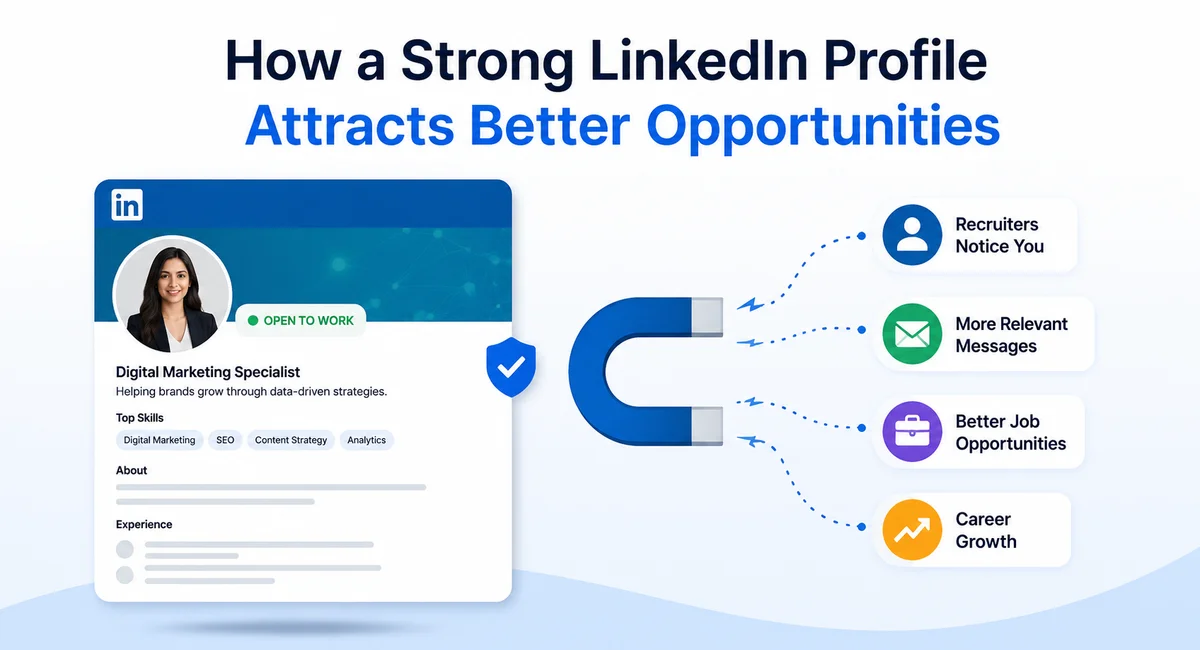
Two people apply for the same type of role. Similar experience, similar skills, similar resumes. One gets three recruiter messages in a week. The other hears nothing. The difference usually isn’t talent. It’s that one profile was built to be found, and the other was just filled out once and forgotten.
Recruiters aren’t reading every profile top to bottom. They’re scanning, searching, and deciding in seconds whether to click further. A profile that’s structured with that in mind gets seen. One that reads like an afterthought gets scrolled past, no matter how strong the person behind it actually is.
Why Recruiters Check LinkedIn Before Your CV
Hiring hasn’t worked the old way for a while now. Most recruiters don’t wait for applications to land in an inbox. They search first. A role opens, and before anyone posts it publicly, someone is already typing job titles and skills into LinkedIn’s search bar to see who comes up.
That means your profile is often the first thing a recruiter sees about you, not the second. Your CV usually comes later, after they’ve already formed an opinion.
What This Changes for You
It shifts the job from “describe yourself well” to “be findable first, then convincing.” A profile that isn’t built to show up in a search doesn’t get read at all. It just doesn’t get found in the first place.
Your Headline Is a Search Term, Not Just a Job Title
Most headlines just repeat the current job title. That’s a missed opportunity, because LinkedIn’s search treats your headline as one of the strongest signals of what you actually do.
Before and After
- Vague: “Marketing Professional”
- Specific: “B2B Content Marketing Manager | SaaS & Tech Brands”
The first tells a recruiter almost nothing searchable. The second matches exactly what someone would type into the search bar when they’re hiring for that role.
A strong headline usually includes:
- Your specific role, not a broad category
- The industry or niche you work in
- Who you help or what you specialise in
It’s a short line, but it carries a lot of weight, which is exactly why some people choose not to guess at it themselves and instead get it written through a LinkedIn Profile Writing Service in UK, where the phrasing is tested rather than assumed.
What to Include in Your Summary
The Summary section gets read before almost anything else, so vague, generic lines waste that space. It should say clearly what you do, who you do it for, and what results you’ve gotten, not just how you feel about your career.
Vague vs. Specific
| Vague Summary Line | Specific Summary Line |
| Passionate marketer with a love for creativity. | Marketing manager who has grown organic traffic by 40%+ across three SaaS brands |
| Experienced in sales and client relations. | B2B sales lead managing accounts worth $2M+ annually across the UK and Ireland |
| Hardworking professional looking for new opportunities. | Operations manager who cut supply chain costs by 18% in under a year. |
The right column gives a recruiter something to act on. The left column just fills space.
A LinkedIn Profile Isn’t Just a Resume Rewritten
A CV and a LinkedIn profile look similar on the surface: same jobs, same dates, same skills. But they’re built for different situations, and treating them as one document copied twice usually weakens both.
A CV is written for one employer at a time, for one specific role, and it’s meant to be brief and direct. A LinkedIn profile is read by many different people over time, so it needs more context and a tone that sounds like you, not a list of duties. The About section works best in first person. The Experience section can stay closer to a CV format, but the two documents should agree on facts, not repeat each other word for word.
Keeping both consistent takes time most people don’t have between job searches, which is why quite a few professionals turn to affordable CV writing helpers to align the two properly instead of doing it alone.
How Skills and Endorsements Help You Get Found
The Skills section isn’t just a formality. It’s another way recruiters filter search results, so what you list and how you order it actually matters.
- List specific skills over broad ones (“Technical SEO” instead of just “Marketing”)
- Put your strongest, most relevant skills first. They carry the most search weight
- Keep the list to skills you can actually speak to in an interview
- Ask colleagues for endorsements on your top skills, and return the favour
- Remove outdated or irrelevant skills instead of letting the list grow indefinitely
Endorsements aren’t just a vanity number. Profiles with several relevant endorsements tend to show up more often in recruiter searches than ones without.
Why Active Profiles Get Messaged More Than Inactive Ones
A common mistake is updating a profile once, right after landing a job, and then leaving it untouched until the next job search. That gap works against you, because recruiters can usually tell when a profile has gone quiet for a long stretch.
Staying visible doesn’t mean posting every day. It can be as light as commenting on a few industry posts a month, sharing an article with a short opinion attached, or updating your Experience section as soon as something changes, rather than months later. This kind of light, consistent activity keeps your profile showing up in searches and feeds, so recruiters see it even when you’re not actively looking.
Being findable when you’re not job hunting is often what makes the next opportunity come to you first.
LinkedIn Profile Tips That Help Recruiters Find You
A few finishing touches can make a real difference in how often your profile shows up in the right searches, even after the core sections are done:
- Use a clear, recent photo. It’s often the first thing a recruiter notices, and profiles with one tend to get far more views than those without.
- Turn on “Open to Work” if you’re job hunting. It’s visible only to recruiters and quietly signals availability without announcing it publicly.
- Collect a few recommendations from former managers or colleagues. They carry more weight than endorsements because they speak to how you actually work.
- Keep your Experience section current. Even small updates signal an active profile, one recruiters are more likely to trust and revisit.
None of these replaces a strong headline or summary, but together, they round out a profile that’s easy to find and easy to trust.
Answers to Common Questions
How can I make my LinkedIn profile more attractive?
Focus on the sections recruiters actually search: a specific headline, a results-focused summary, and a skills list ordered by relevance. A complete, current profile outperforms a decorated but outdated one.
What makes a LinkedIn profile stand out?
Specificity. A headline naming your exact role and niche, a summary backed by real numbers, and endorsements on skills you actually use stand out more than generic descriptions or a long list of buzzwords.
How do I pick the right skills to add on LinkedIn?
Choose skills that match the job titles and descriptions in your target field, keep the list specific rather than broad, and place your strongest, most relevant ones at the top.
Can ChatGPT or AI tools optimise my LinkedIn profile?
AI tools can help draft a starting point, but they don’t know your actual achievements, tone, or industry nuance. The result usually still needs a human pass to sound accurate and specific rather than generic.
Is a LinkedIn profile as important as a CV?
Yes, but for a different reason. A CV is tailored per application; a profile is searched by many people over time. Both need to be accurate and consistent, but they’re not interchangeable.
Make Your Profile Work for You
Your LinkedIn profile is being read whether you actively manage it or not. Recruiters, hiring managers, and future connections are forming an impression of you either way. The only real choice is whether that impression is one you shaped on purpose, or one that happened by default because a few sections were left half-finished. A profile that works for you doesn’t need to be perfect. It just needs to be intentional.

I help professionals stop underselling themselves and start getting noticed. Through strategic CV writing and career coaching, I turn overlooked profiles into strong, confident applications that lead to real interviews and offers.